FAIR USE NOTICE

FAIR USE NOTICE

A BEAR MARKET ECONOMICS BLOG

OCCUPY EVERYTHING

This site may contain copyrighted material the use of which has not always been specifically authorized by the copyright owner. We are making such material available in an effort to advance understanding of environmental, political, human rights, economic, democracy, scientific, and social justice issues, etc. we believe this constitutes a ‘fair use’ of any such copyrighted material as provided for in section 107 of the US Copyright Law.

In accordance with Title 17 U.S.C. Section 107, the material on this site is distributed without profit to those who have expressed a prior interest in receiving the included information for research and educational purposes. For more information go to: http://www.law.cornell.edu/uscode/17/107.shtml

If you wish to use copyrighted material from this site for purposes of your own that go beyond ‘fair use’, you must obtain permission from the copyright owner.

FAIR USE NOTICE FAIR USE NOTICE: This page may contain copyrighted material the use of which has not been specifically authorized by the copyright owner. This website distributes this material without profit to those who have expressed a prior interest in receiving the included information for scientific, research and educational purposes. We believe this constitutes a fair use of any such copyrighted material as provided for in 17 U.S.C § 107.

Read more at: http://www.etupdates.com/fair-use-notice/#.UpzWQRL3l5M | ET. Updates
FAIR USE NOTICE FAIR USE NOTICE: This page may contain copyrighted material the use of which has not been specifically authorized by the copyright owner. This website distributes this material without profit to those who have expressed a prior interest in receiving the included information for scientific, research and educational purposes. We believe this constitutes a fair use of any such copyrighted material as provided for in 17 U.S.C § 107.

Read more at: http://www.etupdates.com/fair-use-notice/#.UpzWQRL3l5M | ET. Updates

All Blogs licensed under Creative Commons Attribution 3.0

Creative Commons License
This work is licensed under a Creative Commons Attribution 3.0 Unported License.

Tuesday, October 29, 2013

Congressional No-Show at 'Heart-Breaking' Drone Survivor Hearing


In "historic" briefing, Rehman family gives heartbreaking account of drone killing of 65-year-old grandmother... to five lawmakers

- Lauren McCauley, staff writer


The Rehman family waits to testify at the Congressional Briefing on drone strikes Tuesday, October 29. (Photo: @akneerudh/ Twitter)Despite being heralded as the first time in history that U.S. lawmakers would hear directly from the survivors of a U.S. drone strike, only five elected officials chose to attend the congressional briefing that took place Tuesday.

Pakistani schoolteacher Rafiq ur Rehman and his two children—9 year-old daughter Nabila and 13 year-old son Zubair—came to Washington, DC to give their account of a U.S. drone attack that killed Rafiq's mother, Momina Bibi, and injured the two children in the remote tribal region of North Waziristan last October.

"I no longer love blue skies. In fact, I now prefer grey skies. Drones don't fly when sky is grey." –Zubair Rehman, 13-year-old drone victim 


According to journalist Anjali Kamat, who was present and tweeting live during the hearing, the only lawmakers to attend the briefing organized by Rep. Alan Grayson (D-Fla.), were Rep. John Conyers (D-Mich.), Rep. Jan Schakowsky (D-Ill.), Rep. Rush Holt (D-NJ) and Rep. Rick Nolan (D-Minn.).

Before the handful of reporters and scant lawmakers, however, Rafiq and his children gave dramatic testimony which reportedly caused the translator to break down into tears.

In her testimony, Nabila shared that she was picking okra with her grandmother when the U.S. missile struck and both children described how they used to play outside but are now too afraid.

"I no longer love blue skies. In fact, I now prefer grey skies. Drones don't fly when sky is grey," said Zubair, whose leg was injured by shrapnel during the strike.

“My grandmother was nobody’s enemy," he added.

"Nobody has ever told me why my mother was targeted that day," Rafiq wrote in an open letter to President Barack Obama last week. "The media reported that the attack was on a car, but there is no road alongside my mother's house. Several reported the attack was on a house. But the missiles hit a nearby field, not a house. All reported that five militants were killed. Only one person was killed – a 65-year-old grandmother of nine."

"But the United States and its citizens probably do not know this," Rafiq continued. "No one ever asked us who was killed or injured that day. Not the United States or my own government. Nobody has come to investigate nor has anyone been held accountable."


He concluded, "Quite simply, nobody seems to care."


You can watch a recording of the briefing below and here:


The purpose of the briefing, Grayson told the Guardian, is "simply to get people to start to think through the implications of killing hundreds of people ordered by the president, or worse, unelected and unidentifiable bureaucrats within the Department of Defense without any declaration of war."

The family was joined by their legal representative Jennifer Gibson of the UK human rights organization Reprieve. Their Islamabad-based lawyer, Shahzad Akbar, was also supposed to be present but was denied a visa by the US authorities—"a recurring problem," according to Reprieve, "since he began representing civilian victims of drone strikes in 2011."

"The onus is now on President Obama and his Administration to bring this war out of the shadows and to give answers," said Gibson.

Also present was U.S. filmmaker Robert Greenwald, who first met Rafiq when he traveled to Pakistan to interview the drone strike victims for his documentary Unmanned: America's Drone Wars.  Before the briefing, Greenwald told the Guardian that he hoped the briefing "will begin the process of demanding investigation. Innocent people are being killed."

The following clip from Unmanned was shown at Tuesday's hearing:


_____________________

Saturday, October 5, 2013

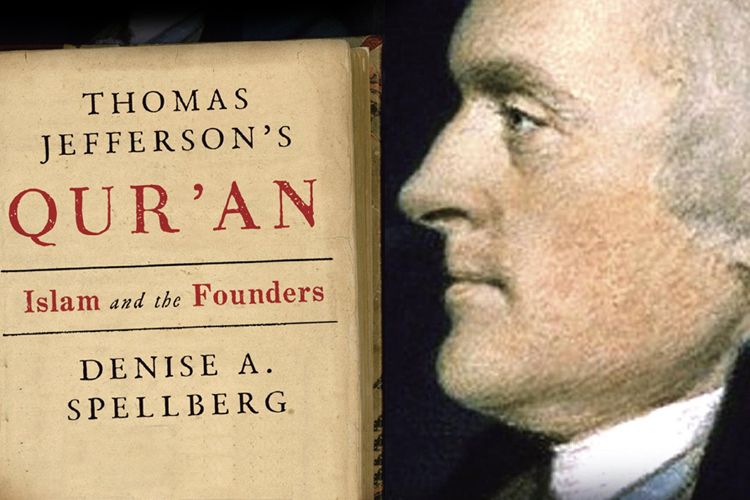
Our Founding Fathers included Islam


SALON


Our Founding Fathers included Islam

Thomas Jefferson didn't just own a Quran -- he engaged with Islam and fought to ensure the rights of Muslims


Our Founding Fathers included Islam
 
[He] sais “neither Pagan nor Mahamedan [Muslim] nor Jew ought to be excluded from the civil rights of the Commonwealth because of his religion.”
 — Thomas Jefferson, quoting John Locke, 1776


At a time when most Americans were uninformed, misinformed, or simply afraid of Islam, Thomas Jefferson imagined Muslims as future citizens of his new nation. His engagement with the faith began with the purchase of a Qur’an eleven years before he wrote the Declaration of Independence. Jefferson’s Qur’an survives still in the Library of Congress, serving as a symbol of his and early America’s complex relationship with Islam and its adherents. That relationship remains of signal importance to this day.

That he owned a Qur’an reveals Jefferson’s interest in the Islamic religion, but it does not explain his support for the rights of Muslims. Jefferson first read about Muslim “civil rights” in the work of one of his intellectual heroes: the seventeenth-century English philosopher John Locke. Locke had advocated the toleration of Muslims—and Jews—following in the footsteps of a few others in Europe who had considered the matter for more than a century before him. Jefferson’s ideas about Muslim rights must be understood within this older context, a complex set of transatlantic ideas that would continue to evolve most markedly from the sixteenth through the nineteenth centuries.

Amid the interdenominational Christian violence in Europe, some Christians, beginning in the sixteenth century, chose Muslims as the test case for the demarcation of the theoretical boundaries of their toleration for all believers. Because of these European precedents, Muslims also became a part of American debates about religion and the limits of citizenship. As they set about creating a new government in the United States, the American Founders, Protestants all, frequently referred to the adherents of Islam as they contemplated the proper scope of religious freedom and individual rights among the nation’s present and potential inhabitants. The founding generation debated whether the United States should be exclusively Protestant or a religiously plural polity. And if the latter, whether political equality—the full rights of citizenship, including access to the highest office—should extend to non-Protestants. The mention, then, of Muslims as potential citizens of the United States forced the Protestant majority to imagine the parameters of their new society beyond toleration. It obliged them to interrogate the nature of religious freedom: the issue of a “religious test” in the Constitution, like the ones that would exist at the state level into the nineteenth century; the question of “an establishment of religion,” potentially of Protestant Christianity; and the meaning and extent of a separation of religion from government.

Resistance to the idea of Muslim citizenship was predictable in the eighteenth century. Americans had inherited from Europe almost a millennium of negative distortions of the faith’s theological and political character. Given the dominance and popularity of these anti-Islamic representations, it was startling that a few notable Americans not only refused to exclude Muslims, but even imagined a day when they would be citizens of the United States, with full and equal rights. This surprising, uniquely American egalitarian defense of Muslim rights was the logical extension of European precedents already mentioned. Still, on both sides of the Atlantic, such ideas were marginal at best. How, then, did the idea of the Muslim as a citizen with rights survive despite powerful opposition from the outset? And what is the fate of that ideal in the twenty-first century?

This book provides a new history of the founding era, one that explains how and why Thomas Jefferson and a handful of others adopted and then moved beyond European ideas about the toleration of Muslims. It should be said at the outset that these exceptional men were not motivated by any inherent appreciation for Islam as a religion. Muslims, for most American Protestants, remained beyond the outer limit of those possessing acceptable beliefs, but they nevertheless became emblems of two competing conceptions of the nation’s identity: one essentially preserving the Protestant status quo, and the other fully realizing the pluralism implied in the Revolutionary rhetoric of inalienable and universal rights. Thus while some fought to exclude a group whose inclusion they feared would ultimately portend the undoing of the nation’s Protestant character, a pivotal minority, also Protestant, perceiving the ultimate benefit and justice of a religiously plural America, set about defending the rights of future Muslim citizens.

They did so, however, not for the sake of actual Muslims, because none were known at the time to live in America. Instead, Jefferson and others defended Muslim rights for the sake of “imagined Muslims,” the promotion of whose theoretical citizenship would prove the true universality of American rights. Indeed, this defense of imagined Muslims would also create political room to consider the rights of other despised minorities whose numbers in America, though small, were quite real, namely Jews and Catholics. Although it was Muslims who embodied the ideal of inclusion, Jews and Catholics were often linked to them in early American debates, as Jefferson and others fought for the rights of all non-Protestants.

In 1783, the year of the nation’s official independence from Great Britain, George Washington wrote to recent Irish Catholic immigrants in New York City. The American Catholic minority of roughly twenty-five thousand then had few legal protections in any state and, because of their faith, no right to hold political office in New York. Washington insisted that “the bosom of America” was “open to receive . . . the oppressed and the persecuted of all Nations and Religions; whom we shall welcome to a participation of all our rights and privileges.” He would also write similar missives to Jewish communities, whose total population numbered only about two thousand at this time.

One year later, in 1784, Washington theoretically enfolded Muslims into his private world at Mount Vernon. In a letter to a friend seeking a carpenter and bricklayer to help at his Virginia home, he explained that the workers’ beliefs—or lack thereof—mattered not at all: “If they are good workmen, they may be of Asia, Africa, or Europe. They may be Mahometans [Muslims], Jews or Christian of an[y] Sect, or they may be Atheists.” Clearly, Muslims were part of Washington’s understanding of religious pluralism—at least in theory. But he would not have actually expected any Muslim applicants.

Although we have since learned that there were in fact Muslims resident in eighteenth-century America, this book demonstrates that the Founders and their generational peers never knew it. Thus their Muslim constituency remained an imagined, future one. But the fact that both Washington and Jefferson attached to it such symbolic significance is not accidental. Both men were heir to the same pair of opposing European traditions.

The first, which predominated, depicted Islam as the antithesis of the “true faith” of Protestant Christianity, as well as the source of tyrannical governments abroad. To tolerate Muslims—to accept them as part of a majority Protestant Christian society—was to welcome people who professed a faith most eighteenth-century Europeans and Americans believed false, foreign, and threatening. Catholics would be similarly characterized in American Protestant founding discourse. Indeed, their faith, like Islam, would be deemed a source of tyranny and thus antithetical to American ideas of liberty.

In order to counter such fears, Jefferson and other supporters of non-Protestant citizenship drew upon a second, less popular but crucial stream of European thought, one that posited the toleration of Muslims as well as Jews and Catholics. Those few Europeans, both Catholic and Protestant, who first espoused such ideas in the sixteenth century often died for them. In the seventeenth century, those who advocated universal religious toleration frequently suffered death or imprisonment, banishment or exile, the elites and common folk alike. The ranks of these so-called heretics in Europe included Catholic and Protestant peasants, Protestant scholars of religion and political theory, and fervid Protestant dissenters, such as the first English Baptists—but no people of political power or prominence. Despite not being organized, this minority consistently opposed their coreligionists by defending theoretical Muslims from persecution in Christian-majority states.

As a member of the eighteenth-century Anglican establishment and a prominent political leader in Virginia, Jefferson represented a different sort of proponent for ideas that had long been the hallmark of dissident victims of persecution and exile. Because of his elite status, his own endorsement of Muslim citizenship demanded serious consideration in Virginia—and the new nation. Together with a handful of like-minded American Protestants, he advanced a new, previously unthinkable national blueprint. Thus did ideas long on the fringe of European thought flow into the mainstream of American political discourse at its inception.

Not that these ideas found universal welcome. Even a man of Jefferson’s national reputation would be attacked by his political opponents for his insistence that the rights of all believers should be protected from government interference and persecution. But he drew support from a broad range of constituencies, including Anglicans (or Episcopalians), as well as dissenting Presbyterians and Baptists, who suffered persecution perpetrated by fellow Protestants. No denomination had a unanimously positive view of non-Protestants as full American citizens, yet support for Muslim rights was expressed by some members of each.

What the supporters of Muslim rights were proposing was extraordinary even at a purely theoretical level in the eighteenth century. American citizenship—which had embraced only free, white, male Protestants—was in effect to be abstracted from religion. Race and gender would continue as barriers, but not so faith. Legislation in Virginia would be just the beginning, the First Amendment far from the end of the story; in fact, Jefferson, Washington, and James Madison would work toward this ideal of separation throughout their entire political lives, ultimately leaving it to others to carry on and finish the job. This book documents, for the first time, how Jefferson and others, despite their negative, often incorrect understandings of Islam, pursued that ideal by advocating the rights of Muslims and all non-Protestants.

A decade before George Washington signaled openness to Muslim laborers in 1784 he had listed two slave women from West Africa among his taxable property. “Fatimer” and “Little Fatimer” were a mother and daughter—both indubitably named after the Prophet Muhammad’s daughter Fatima (d. 632). Washington advocated Muslim rights, never realizing that as a slaveholder he was denying Muslims in his own midst any rights at all, including the right to practice their faith. This tragic irony may well have also recurred on the plantations of Jefferson and Madison, although proof of their slaves’ religion remains less than definitive. Nevertheless, having been seized and transported from West Africa, the first American Muslims may have numbered in the tens of thousands, a population certainly greater than the resident Jews and possibly even the Catholics. Although some have speculated that a few former Muslim slaves may have served in the Continental Army, there is little direct evidence any practiced Islam and none that these individuals were known to the Founders. In any case, they had no influence on later political debates about Muslim citizenship.

The insuperable facts of race and slavery rendered invisible the very believers whose freedoms men like Jefferson, Washington, and Madison defended, and whose ancestors had resided in America since the seventeenth century, as long as Protestants had. Indeed, when the Founders imagined future Muslim citizens, they presumably imagined them as white, because by the 1790s “full American citizenship could be claimed by any free, white immigrant, regardless of ethnicity or religious beliefs.”

The two actual Muslims Jefferson would wittingly meet during his lifetime were not black West African slaves but North African ambassadors of Turkish descent. They may have appeared to him to have more melanin than he did, but he never commented on their complexions or race. (Other observers either failed to mention it or simply affirmed that the ambassador in question was not black.) But then Jefferson was interested in neither diplomat for reasons of religion or race; he engaged them because of their political power. (They were, of course, also free.)

But even earlier in his political life—as an ambassador, secretary of state, and vice president—Jefferson had never perceived a predominantly religious dimension to the conflict with North African Muslim powers, whose pirates threatened American shipping in the Mediterranean and eastern Atlantic. As this book demonstrates, Jefferson as president would insist to the rulers of Tripoli and Tunis that his nation harbored no anti-Islamic bias, even going so far as to express the extraordinary claim of believing in the same God as those men.

The equality of believers that Jefferson sought at home was the same one he professed abroad, in both contexts attempting to divorce religion from politics, or so it seemed. In fact, Jefferson’s limited but unique appreciation for Islam appears as a minor but active element in his presidential foreign policy with North Africa—and his most personal Deist and Unitarian beliefs. The two were quite possibly entwined, with their source Jefferson’s unsophisticated yet effective understanding of the Qur’an he owned.

Still, as a man of his time, Jefferson was not immune to negative feelings about Islam. He would even use some of the most popular anti-Islamic images inherited from Europe to drive his early political arguments about the separation of religion from government in Virginia. Yet ultimately Jefferson and others not as well known were still able to divorce the idea of Muslim citizenship from their dislike of Islam, as they forged an “imagined political community,” inclusive beyond all precedent.

The clash between principle and prejudice that Jefferson himself overcame in the eighteenth and nineteenth centuries remains a test for the nation in the twenty-first. Since the late nineteenth century, the United States has in fact become home to a diverse and dynamic American Muslim citizenry, but this population has never been fully welcomed. Whereas in Jefferson’s time organized prejudice against Muslims was exercised against an exclusively foreign and imaginary nonresident population, today political attacks target real, resident American Muslim citizens. Particularly in the wake of 9/11 and the so-called War on Terror, a public discourse of anti-Muslim bigotry has arisen to justify depriving American Muslim citizens of the full and equal exercise of their civil rights.

For example, recent anti-Islamic slurs used to deny the legitimacy of a presidential candidacy contained eerie echoes of founding precedents. The legal possibility of a Muslim president was first discussed with vitriol during debates involving America’s Founders. Thomas Jefferson would be the first in the history of American politics to suffer the false charge of being a Muslim, an accusation considered the ultimate Protestant slur in the eighteenth century. That a presidential candidate in the twenty-first century should have been subject to much the same false attack, still presumed as politically damning to any real American Muslim candidate’s potential for elected office, demonstrates the importance of examining how the multiple images of Islam and Muslims first entered American consciousness and how the rights of Muslims first came to be accepted as national ideals. Ultimately, the status of Muslim citizenship in America today cannot be properly appreciated without establishing the historical context of its eighteenth-century origins.

Muslim American rights became a theoretical reality early on, but as a practical one they have been much slower to evolve. In fact, they are being tested daily. Recently, John Esposito, a distinguished historian of Islam in contemporary America, observed, “Muslims are led to wonder: What are the limits of this Western pluralism?” Thomas Jefferson’s Qur’an documents the origins of such pluralism in the United States in order to illuminate where, when, and how Muslims were first included in American ideals.

Until now, most historians have proposed that Muslims represented nothing more than the incarnated antithesis of American values. These same voices also insist that Protestant Americans always and uniformly defined both the religion of Islam and its practitioners as inherently un-American. Indeed, most historians posit that the emergence of the United States as an ideological and political phenomenon occurred in opposition to eighteenth-century concepts about Islam as a false religion and source of despotic government. There is certainly evidence for these assumptions in early American religious polemic, domestic politics, foreign policy, and literary sources. There are, however, also considerable observations about Islam and Muslims that cast both in a more affirmative light, including key references to Muslims as future American citizens in important founding debates about rights. These sources show that American Protestants did not monolithically view Islam as “a thoroughly foreign religion.”

This book documents the counterassertion that Muslims, far from being definitively un-American, were deeply embedded in the concept of citizenship in the United States since the country’s inception, even if these inclusive ideas were not then accepted by the majority of Americans. While focusing on Jefferson’s views of Islam, Muslims, and the Islamic world, it also analyzes the perspectives of John Adams and James Madison. Nor is it limited to these key Founders. The cast of those who took part in the contest concerning the rights of Muslims, imagined and real, is not confined to famous political elites but includes Presbyterian and Baptist protestors against Virginia’s religious establishment; the Anglican lawyers James Iredell and Samuel Johnston in North Carolina, who argued for the rights of Muslims in their state’s constitutional ratifying convention; and John Leland, an evangelical Baptist preacher and ally of Jefferson and Madison in Virginia, who agitated in Connecticut and Massachusetts in support of Muslim equality, the Constitution, the First Amendment, and the end of established religion at the state level.

The lives of two American Muslim slaves of West African origin, Ibrahima Abd al-Rahman and Omar ibn Said, also intersect this narrative. Both were literate in Arabic, the latter writing his autobiography in that language. They remind us of the presence of tens of thousands of Muslim slaves who had no rights, no voice, and no hope of American citizenship in the midst of these early discussions about religious and political equality for future, free practitioners of Islam.

Imagined Muslims, along with real Jews and Catholics, were the consummate outsiders in much of America’s political discourse at the founding. Jews and Catholics would struggle into the twentieth century to gain in practice the equal rights assured them in theory, although even this process would not entirely eradicate prejudice against either group. Nevertheless, from among the original triad of religious outsiders in the United States, only Muslims remain the objects of a substantial civic discourse of derision and marginalization, still being perceived in many quarters as not fully American. This book writes Muslims back into our founding narrative in the hope of clarifying the importance of critical historical precedents at a time when the idea of the Muslim as citizen is, once more, hotly contested.


Excerpted from “Thomas Jefferson’s Qur’an” by Denise A. Spellberg. Copyright © 2013 by Denise A. Spellberg. Excerpted by permission of Knopf, a division of Random House LLC. All rights reserved. No part of this excerpt may be reproduced or reprinted without permission in writing from the publisher.

Friday, October 4, 2013

Daniel Kahneman’s Gripe With Behavioral Economics


The Daily Beast


Nobel-winning psychologist Daniel Kahneman explains his problem with people using the term ‘behavioral economics.’


If you’re looking to better understand your own brain and only have time to read one book on the subject, it should be Daniel Kahneman’s Thinking, Fast and Slow, now out in paperback. Kahneman, a psychologist at Princeton University who won the 2002 Nobel Prize for economics for work that he and longtime collaborator Amos Tversky did on the psychology of decision making, gives a detailed, comprehensive account of how our cognitive processes are divided into fast (“System 1”) and slow (“System 2”) thinking. System 1 handles basic tasks and calculations like walking, breathing, and determining the value of 1 + 1, while System 2 takes on more complicated, abstract decision making and calculations like 435 x 23. Many of our mistakes, Kahneman writes, come when exhaustion or other factors cause System 1 to do jobs better suited for System 2.
 
130425-daniel-kahneman-singal-tease
‘Thinking, Fast and Slow’ by Daniel Kahneman. 512 pp. FSG. $16. (AP)


In a recent email interview, Kahneman explains the dangers of overconfidence, why economists are still at the top of the policy-making pecking order, and his good-natured gripe with the term “behavioral economics.”
 

It seems like overconfidence is one of the big targets of Thinking, Fast and Slow. Unfortunately, there’s some evidence that people are more drawn to those who exhibit this tendency, even when it isn’t warranted (such as political prognosticators). How do we get around our ingrained tendencies to be attracted to those who loudly proclaim easy answers?
 

This is most difficult where it matters the most, in running a democracy. People like leaders who look like they are dominant, optimistic, friendly to their friends, and quick on the trigger when it comes to enemies. They like boldness and despise the appearance of timidity and protracted doubt. Here, the hope for the selection of qualified leaders is in serious and critical media, but the incentives of popular media favor mirroring the preferences of the public, however misguided.
 

Prospects are quite a bit better for the selection of good leaders in organizations. In business enterprises as well as in politics, the more assertive and confident individuals have a big advantage, especially if they are also lucky and achieve a few early successes. But organizations are better placed to evaluate people by substantive achievements and by their contributions to the conversation. They can apply slow thinking to the selection of leaders, and they should.
 

Do you see any resistance to the ideas in Thinking, Fast and Slow from people who don’t want to acknowledge how error-prone the human brain can be under certain circumstances?
 

Amos Tversky and I encountered this kind of resistance to our early work, which was focused mostly on errors of judgment, rather than on intelligent performance. Some people chose to infer that we believed humans to be feeble-minded, which we never did. Thinking, Fast and Slow is explicit in offering a view of the mind that deals with marvels as well as flaws, and it has largely escaped the criticism that it is biased against human nature. However, I have encountered some people, especially in the field of finance, who can easily think of individuals (often themselves, sometimes Warren Buffett) who understand the world with far more precision than my book suggests anyone can.
 

What has it been like winning the Nobel Prize and seeing your work explode in popularity without Amos Tversky around to share these experiences with you?
 

The work was already quite well known before Amos’s death, and he knew before he died that we had been nominated for the Nobel and were quite likely to get it eventually. For him, the Nobel was one of many things that he was going to miss by dying at 59, and certainly not the most important. As for me, I never forget that the recognition I get is for work that was done by a successful team of which I was lucky to be a member.
 

It’s a complicated question, but what is the simplest, most straightforward advice you’d give to someone who wants to make sure their System 2 isn’t ceding certain important decisions and calculations to System 1?
 

Not really a complicated question because the answers are not surprising. Slow down, sleep on it, and ask your most brutal and least empathetic close friends for their advice. Friends are sometimes a big help when they share your feelings. In the context of decisions, the friends who will serve you best are those who understand your feelings but are not overly impressed by them. For example, one important source of bad decisions is loss aversion, by which we put far more weight on what we may lose than on what we may gain. Advisors are likely to give us advice in which gains and losses are treated more neutrally—they are more likely to adopt a broad and long-term view of our problem, less likely than the affected individual to be swayed by the fears and hopes of the moment.

You note in the foreword to the recently released The Behavioral Foundations of Public Policy that economists have a “monopoly” on policy making, that “Like it or not, it is a fact of life that economics is the only social science that is generally recognized as relevant and useful by policy makers.” Why is that?
 

Policy makers, like most people, normally feel that they already know all the psychology and all the sociology they are likely to need for their decisions. I don’t think they are right, but that’s the way it is. On the other hand, people who have not studied economics are fully aware of their ignorance. The use of mathematics adds a touch of magic to economics. Indeed it makes perfect sense for economists to be the interpreters of policy-relevant research, because they understand and are trained to use big data. This, and the fact that policies always involve tradeoffs and almost always involve money, explains the dominant role of economics in policy.
 
When it comes to policy making, applications of social or cognitive psychology are now routinely labeled behavioral economics.

Something else has happened in recent years that is amusing, but also frustrating for psychologists. When it comes to policy making, applications of social or cognitive psychology are now routinely labeled behavioral economics. The “culprits” in the appropriation of my discipline are two of my best friends, Richard Thaler and Cass Sunstein. Their joint masterpiece Nudge is rich in policy recommendations that apply psychology to problems—sometimes common-sense psychology, sometimes the scientific kind. Indeed, there is far more psychology than economics in Nudge. But because one of the authors of Nudge is the guru of behavioral economics, the book immediately became the public definition of behavioral economics. The consequence is that psychologists applying their field to policy issues are now seen as doing behavioral economics. As a result, they are almost forced to accept the label of behavioral economists, even if they are as innocent of economic knowledge as I am. Furthermore, these psychologists are rewarded by greater attention to their ideas, because they benefit from the higher credibility that comes to credentialed economists.
 

Obviously you (and Eldar Shafir, and other researchers) are hoping to change this, to have psychology better represented at the policy-making table. Where do you think Thinking, Fast and Slow has fit into this effort, and what’s next in the ongoing attempt to weave psychological findings more tightly into public policy?
 

The intrepid readers who get close to the end of my long tome will find an enthusiastic endorsement of the policy applications that have come under the label of behavioral economics. I am very optimistic about the future of that work, which is characterized by achieving medium-sized gains by nano-sized investments. But I hope that the work will eventually be recognized for what it is and relabeled. In the U.K., for example, there is a unit doing that work at 10 Downing Street. Its informal name is “the Nudge Unit” and its formal name is the “Behavioural Insights Team.” It is headed by a psychologist. The value of proper labeling is that good psychologists are more likely to be drawn to participate in efforts that explicitly recognize their discipline.
 

What’s so powerful about the rational actor model? Do you think economists will ever willingly give up those parts of it which should be discarded?
 

Think of the kind of market that Adam Smith described. You can get a lot of insight into how just the right amount of bread gets to London in the morning by assuming that the baker and the other participants in the market pursue their own interests in a sensible manner. The rational-agent model takes this idea to its logical extreme. If you want to predict the behavior of a market, you are best off assuming individual agents who act in a way that is predictable and fairly simple—for example by assuming that the participants are similarly motivated and exploit all their opportunities. I am not an economist, but I find it hard to imagine that they will ever give up the use of schematic individual agents, even if they endow these agents with a little more realistic psychology. And I see no reason why they should.
 

The rational agent model has more questionable consequences in the domain of policy because the assumption that individuals are rational in the pursuit of their interests has an ideological coloring and policy implications that many would view as unfortunate. If individuals are rational, there is no need to protect them against their own choices. At the extreme, no need for Social Security or for laws that compel motorcycle riders to wear helmets. It is not an accident that the department of economics at the University of Chicago, one of the most illustrious in the world, is known both for its adherence to a strict version of the rational actor model and for very conservative politics.
 

It seems as though there are many areas in which economists and psychologists are vying for the same public-policy space. How do you get around the fact that economists can produce elegant models, nifty graphs, and the like (even when the underlying ideas aren’t sturdy), but psychology research isn’t always quite so easy to present to policy makers in a shiny, impressive-looking way?
 

You should not play down psychologists’ ability to turn out nifty Power Point slides. More seriously, I see much more collaboration than competition between psychologists and economists in the domain of policy, and my only quibble is with the label. I would like them all, when they collaborate, to call themselves behavioral scientists. The synergy is evident in policy books such as Cass Sunstein’s Simpler and the forthcoming Scarcity: Why Having Too Little Means So Much, by Sendhil Mullainathan and Eldar Shafir which deals with both the economics and the psychology of poverty.

Editor's note: A previous version of this article incorrectly identified the University of Chicago as Chicago University. The post has since been updated.
 

Friday, September 6, 2013

Robert Greene on his 48 laws of power: 'I'm not evil – I'm a realist' (A complete list)


Robert Greene on his 48 laws of power: 'I'm not evil – I'm a realist'

His first book has been called a 'psychopath's bible', and its fans include Will Smith and Jay-Z. So is the author actually some sort of malevolent mastermind?

Robert Greene: 'I felt like a child exposing what the parents are up to'
Robert Greene: 'I felt like a child exposing what the parents are up to' Photograph: Amanda Marsalis for the Guardian
 
 
Some people think Robert Greene is evil. They're the ones that read The 48 Laws of Power, his bestselling 1998 debut, saw the world depicted as a writhing snakepit of treachery and mind games, and felt that the author must be part of the problem. Other fans think he's the solution, including Will Smith, American Apparel CEO Dov Charney (who calls it "the Bible for atheists") and so many rappers, from Jay-Z on down, that the New Yorker dubbed him "hip-hop's Machiavelli". But when you advise your readers, "Discover each man's thumbscrew" (Law 33) or "Pose as a friend, work as a spy" (Law 14), some are prone to expect the worst.  

Mastery

by Robert Greene
"I'm not who people expect me to be," says Greene, an earnest, thoughtful 53-year-old with a somewhat tense smile. "I'm not Henry Kissinger." In conversation at his London publisher's office, as in his books, he always has an apt quotation to hand. "Charles de Gaulle said, I realised that when people met me they were expecting to meet Charles de Gaulle. I had to learn to be the man inside the quotes. But generally I prefer to be myself. I don't have to pretend to be this mastermind."

Greene doesn't think he's evil, obviously, but nor does he consider himself particularly good. He says he's just a realist. "I believe I described a reality that no other book tried to describe," he says. "I went to an extreme for literary purposes because I felt all the self-help books out there were so gooey and Pollyanna-ish and nauseating. It was making me angry."

Even if The 48 Laws of Power can be read as a bastard's handbook, he wrote it to demystify the dirty tricks of the executives he encountered during a dispiriting period as a Hollywood screenwriter. "I felt like a child exposing what the parents are up to and laughing at it," he says. "Opening the curtain and letting people see the Wizard of Oz."

Greene is accustomed to defending his first book, but I suspect he's trying to move beyond it with his latest, Mastery, which studies how talent is developed, using a heavily researched slew of examples including Einstein, Darwin, Goethe and John Coltrane. "I was a little worried that young people would think the only game was being political and manipulative when really the bigger game is being so good at what you do that nobody can argue with your results," he says.

Mastery is an illuminating book but its message (the secret of success is working incredibly hard for many years) is much tougher and more exacting than the follow-your-dreams manuals with which it will share the self-help shelves. "I hate them," he says. "I was under a lot of pressure to write something faster and shorter and easier for people to consume and I resisted that. So maybe this book won't sell because I've loaded the donkey with all that baggage, but I do at least try to debunk the idea that it's all about your parents and education and wealth."

On that subject, Greene himself had an "insanely middle-class" upbringing in Los Angeles. His father sold cleaning supplies while his mother was a housewife with thwarted artistic ambitions. After studying classics at college, Greene travelled around Europe, working dozens of menial jobs while trying to find the right outlet for his writing. Back in the US, he meandered through journalism and into Hollywood, before finally publishing The 48 Laws of Power in his late 30s.

His bestsellers (including the similarly gimlet-eyed The Art of Seduction and The 33 Strategies of War) have made him a wealthy man, but he could be even richer if he took all the offers that came his way. For one thing, he doesn't think he's a great public speaker. "I'm not like Malcolm Gladwell, who makes millions from that kind of thing. Maybe it's a shortcoming. I'm so earnest in trying to give people so much information that I overdo it." He laughs almost inaudibly. "I need to get a shtick."

He turns down a lot of consultancy work because he is only drawn to people with interesting life stories, whether Charney (he's on American Apparel's board of directors), 50 Cent (they collaborated on 2009's The 50th Law) or Barack Obama. He is now working with labour organisers in Latin America, and his liberal politics disappoint some of his fans in the business world, who expect him to be a champion of the ruthless go-getter.

"I'm a huge Obama supporter," he says. "Romney is satan to me. The great thing about America is that you can come from the worst circumstances and become something remarkable. It's Jay-Z and 50 Cent and Obama and my Jewish ancestors – that's the America we want to celebrate. Not the vulture capitalist. These morons like Mitt Romney, they produce nothing. Republicans are feeding off fairytales and that's what did them in this year and hopefully will keep doing them in for ever, because they're a lot of scoundrels."

Greene claims that most of the emails he receives are from readers who used his first book to understand and outwit manipulative people, but surely he has inadvertently created a few scoundrels himself? "There are people on the borderline and maybe the book helps them to move into that sociopathic realm so then I feel bad," he concedes, "but mainly it's positive."

Mastery is so much warmer and more encouraging than its predecessors that I wonder if his view of human nature has softened. Instead of backstabbing brutes, are we in fact marvellous creatures?

He pulls a face, resisting the siren song of Pollyanna. "I'm not sure I'd go that far."

The Laws

Law 1: Never Outshine The Master
Law 2: Never put too Much Trust in Friends
Law 3: Conceal Your Intentions
Law 4: Always Say Less than Necessary
Law 5: So Much Depends on Reputation
Law 6: Court Attention at all Cost
Law 7: Get Others to Do the Work for You
Law 8: Make Other People Come To You Use Bait
Law 9: Win Through Your Actions - Not Argument
Law 10: Infection: Avoid the Unhappy and Unlucky
Law 11: Learn To Keep People Dependent on You
Law 12: Use Selective Honesty to Disarm Your Victim
Law 13: Asking for Help Appeal to People's Self Interest
Law 14: Pose as a Friend, Work as a Spy
Law 15: Crush Your Enemy Totally
Law 16: Use Absence to Increase Respect and Honor
Law 17: Cultivate an air of Unpredictability
Law 18: Isolation is Dangerous
Law 19: Do Not Offend the Wrong Person
Law 20: Do Not Commit to Anyone
Law 21: Play a Sucker to Catch a Sucker
Law 22: Surrender Tactic: Transform Weakness into Power
Law 23: Concentrate Your Forces
Law 24: Play the Perfect Courtier
Law 25: Recreate Yourself
Law 26: Keep Your Hands Clean
Law 27: Create a Cult: Play on People’s Need to Believe
Law 28: Enter Action with Boldness
Law 29: Plan all the way to the End
Law 30: Make Your Accomplishments Seem Effortless
Law 31: Get others to Play with the Cards you Deal
Law 32: Play to People’s Fantasies
Law 33: Discover Each Man’s Thumbscrew
Law 34: Be Royal in Your Own Fashion – Act Like a King.
Law 35: Master the Art of Timing
Law 36: Disdain things you cannot have
Law 37: Create Compelling Spectacles
Law 38: Think as you like, but behave like others
Law 39: Stir Up Waters to Catch Fish
Law 40: Despise the Free Lunch
Law 41: Avoid Stepping into a Great Man’s Shoes
Law 42: Strike the Shepherd and the Sheep Will Scatter
Law 43: Work on the Heart and Mind of Others
Law 44: Disarm and Infuriate with the Mirror Effect
Law 45: Preach Change But Never Reform Quickly.
Law 46 Never Appear Too Perfect
Law 47: In Victory Learn When To Stop
Law 48: Assume Formlessness
- See more at: http://48laws-of-power.blogspot.com/#sthash.BetH9u4N.dpuf

The Laws

Law 1: Never Outshine The Master
Law 2: Never put too Much Trust in Friends
Law 3: Conceal Your Intentions
Law 4: Always Say Less than Necessary
Law 5: So Much Depends on Reputation
Law 6: Court Attention at all Cost
Law 7: Get Others to Do the Work for You
Law 8: Make Other People Come To You Use Bait
Law 9: Win Through Your Actions - Not Argument
Law 10: Infection: Avoid the Unhappy and Unlucky
Law 11: Learn To Keep People Dependent on You
Law 12: Use Selective Honesty to Disarm Your Victim
Law 13: Asking for Help Appeal to People's Self Interest
Law 14: Pose as a Friend, Work as a Spy
Law 15: Crush Your Enemy Totally
Law 16: Use Absence to Increase Respect and Honor
Law 17: Cultivate an air of Unpredictability
Law 18: Isolation is Dangerous
Law 19: Do Not Offend the Wrong Person
Law 20: Do Not Commit to Anyone
Law 21: Play a Sucker to Catch a Sucker
Law 22: Surrender Tactic: Transform Weakness into Power
Law 23: Concentrate Your Forces
Law 24: Play the Perfect Courtier
Law 25: Recreate Yourself
Law 26: Keep Your Hands Clean
Law 27: Create a Cult: Play on People’s Need to Believe
Law 28: Enter Action with Boldness
Law 29: Plan all the way to the End
Law 30: Make Your Accomplishments Seem Effortless
Law 31: Get others to Play with the Cards you Deal
Law 32: Play to People’s Fantasies
Law 33: Discover Each Man’s Thumbscrew
Law 34: Be Royal in Your Own Fashion – Act Like a King.
Law 35: Master the Art of Timing
Law 36: Disdain things you cannot have
Law 37: Create Compelling Spectacles
Law 38: Think as you like, but behave like others
Law 39: Stir Up Waters to Catch Fish
Law 40: Despise the Free Lunch
Law 41: Avoid Stepping into a Great Man’s Shoes
Law 42: Strike the Shepherd and the Sheep Will Scatter
Law 43: Work on the Heart and Mind of Others
Law 44: Disarm and Infuriate with the Mirror Effect
Law 45: Preach Change But Never Reform Quickly.
Law 46 Never Appear Too Perfect
Law 47: In Victory Learn When To Stop
Law 48: Assume Formlessness
- See more at: http://48laws-of-power.blogspot.com/#sthash.BetH9u4N.dpuf

The Laws

Law 1: Never Outshine The Master
Law 2: Never put too Much Trust in Friends
Law 3: Conceal Your Intentions
Law 4: Always Say Less than Necessary
Law 5: So Much Depends on Reputation
Law 6: Court Attention at all Cost
Law 7: Get Others to Do the Work for You
Law 8: Make Other People Come To You Use Bait
Law 9: Win Through Your Actions - Not Argument
Law 10: Infection: Avoid the Unhappy and Unlucky
Law 11: Learn To Keep People Dependent on You
Law 12: Use Selective Honesty to Disarm Your Victim
Law 13: Asking for Help Appeal to People's Self Interest
Law 14: Pose as a Friend, Work as a Spy
Law 15: Crush Your Enemy Totally
Law 16: Use Absence to Increase Respect and Honor
Law 17: Cultivate an air of Unpredictability
Law 18: Isolation is Dangerous
Law 19: Do Not Offend the Wrong Person
Law 20: Do Not Commit to Anyone
Law 21: Play a Sucker to Catch a Sucker
Law 22: Surrender Tactic: Transform Weakness into Power
Law 23: Concentrate Your Forces
Law 24: Play the Perfect Courtier
Law 25: Recreate Yourself
Law 26: Keep Your Hands Clean
Law 27: Create a Cult: Play on People’s Need to Believe
Law 28: Enter Action with Boldness
Law 29: Plan all the way to the End
Law 30: Make Your Accomplishments Seem Effortless
Law 31: Get others to Play with the Cards you Deal
Law 32: Play to People’s Fantasies
Law 33: Discover Each Man’s Thumbscrew
Law 34: Be Royal in Your Own Fashion – Act Like a King.
Law 35: Master the Art of Timing
Law 36: Disdain things you cannot have
Law 37: Create Compelling Spectacles
Law 38: Think as you like, but behave like others
Law 39: Stir Up Waters to Catch Fish
Law 40: Despise the Free Lunch
Law 41: Avoid Stepping into a Great Man’s Shoes
Law 42: Strike the Shepherd and the Sheep Will Scatter
Law 43: Work on the Heart and Mind of Others
Law 44: Disarm and Infuriate with the Mirror Effect
Law 45: Preach Change But Never Reform Quickly.
Law 46 Never Appear Too Perfect
Law 47: In Victory Learn When To Stop
Law 48: Assume Formlessness
- See more at: http://48laws-of-power.blogspot.com/#sthash.BetH9u4N.dpuf

The Laws

Law 1: Never Outshine The Master
Law 2: Never put too Much Trust in Friends
Law 3: Conceal Your Intentions
Law 4: Always Say Less than Necessary
Law 5: So Much Depends on Reputation
Law 6: Court Attention at all Cost
Law 7: Get Others to Do the Work for You
Law 8: Make Other People Come To You Use Bait
Law 9: Win Through Your Actions - Not Argument
Law 10: Infection: Avoid the Unhappy and Unlucky
Law 11: Learn To Keep People Dependent on You
Law 12: Use Selective Honesty to Disarm Your Victim
Law 13: Asking for Help Appeal to People's Self Interest
Law 14: Pose as a Friend, Work as a Spy
Law 15: Crush Your Enemy Totally
Law 16: Use Absence to Increase Respect and Honor
Law 17: Cultivate an air of Unpredictability
Law 18: Isolation is Dangerous
Law 19: Do Not Offend the Wrong Person
Law 20: Do Not Commit to Anyone
Law 21: Play a Sucker to Catch a Sucker
Law 22: Surrender Tactic: Transform Weakness into Power
Law 23: Concentrate Your Forces
Law 24: Play the Perfect Courtier
Law 25: Recreate Yourself
Law 26: Keep Your Hands Clean
Law 27: Create a Cult: Play on People’s Need to Believe
Law 28: Enter Action with Boldness
Law 29: Plan all the way to the End
Law 30: Make Your Accomplishments Seem Effortless
Law 31: Get others to Play with the Cards you Deal
Law 32: Play to People’s Fantasies
Law 33: Discover Each Man’s Thumbscrew
Law 34: Be Royal in Your Own Fashion – Act Like a King.
Law 35: Master the Art of Timing
Law 36: Disdain things you cannot have
Law 37: Create Compelling Spectacles
Law 38: Think as you like, but behave like others
Law 39: Stir Up Waters to Catch Fish
Law 40: Despise the Free Lunch
Law 41: Avoid Stepping into a Great Man’s Shoes
Law 42: Strike the Shepherd and the Sheep Will Scatter
Law 43: Work on the Heart and Mind of Others
Law 44: Disarm and Infuriate with the Mirror Effect
Law 45: Preach Change But Never Reform Quickly.
Law 46 Never Appear Too Perfect
Law 47: In Victory Learn When To Stop
Law 48: Assume Formlessness
- See more at: http://48laws-of-power.blogspot.com/#sthash.BetH9u4N.dpuf


The Laws

Law 1: Never Outshine The Master
Law 2: Never put too Much Trust in Friends
Law 3: Conceal Your Intentions
Law 4: Always Say Less than Necessary
Law 5: So Much Depends on Reputation
Law 6: Court Attention at all Cost
Law 7: Get Others to Do the Work for You
Law 8: Make Other People Come To You Use Bait
Law 9: Win Through Your Actions - Not Argument
Law 10: Infection: Avoid the Unhappy and Unlucky
Law 11: Learn To Keep People Dependent on You
Law 12: Use Selective Honesty to Disarm Your Victim
Law 13: Asking for Help Appeal to People's Self Interest
Law 14: Pose as a Friend, Work as a Spy
Law 15: Crush Your Enemy Totally
Law 16: Use Absence to Increase Respect and Honor
Law 17: Cultivate an air of Unpredictability
Law 18: Isolation is Dangerous
Law 19: Do Not Offend the Wrong Person
Law 20: Do Not Commit to Anyone
Law 21: Play a Sucker to Catch a Sucker
Law 22: Surrender Tactic: Transform Weakness into Power
Law 23: Concentrate Your Forces
Law 24: Play the Perfect Courtier
Law 25: Recreate Yourself
Law 26: Keep Your Hands Clean
Law 27: Create a Cult: Play on People’s Need to Believe
Law 28: Enter Action with Boldness
Law 29: Plan all the way to the End
Law 30: Make Your Accomplishments Seem Effortless
Law 31: Get others to Play with the Cards you Deal
Law 32: Play to People’s Fantasies
Law 33: Discover Each Man’s Thumbscrew
Law 34: Be Royal in Your Own Fashion – Act Like a King.
Law 35: Master the Art of Timing
Law 36: Disdain things you cannot have
Law 37: Create Compelling Spectacles
Law 38: Think as you like, but behave like others
Law 39: Stir Up Waters to Catch Fish
Law 40: Despise the Free Lunch
Law 41: Avoid Stepping into a Great Man’s Shoes
Law 42: Strike the Shepherd and the Sheep Will Scatter
Law 43: Work on the Heart and Mind of Others
Law 44: Disarm and Infuriate with the Mirror Effect
Law 45: Preach Change But Never Reform Quickly.
Law 46 Never Appear Too Perfect
Law 47: In Victory Learn When To Stop
Law 48: Assume Formlessness


Saturday, August 17, 2013

Our World at Risk: A Look at WorldRiskReport 2012

United Nations University


Our World at Risk: A Look at WorldRiskReport 2012

 
Disasters can be a country’s worst nightmare — death, destruction and exorbitant recovery costs devastate economies and citizens alike. Between 2002 and 2011, 4,130 disasters were recorded around the world, causing damages of more than US$1.19 trillion and killing more than a million people. Moreover, the frequency and intensity of disasters is on the rise.

Not all countries face the same level of disaster risk. What are the factors that determine a country’s level of risk, and how can this be expressed both qualitatively and quantitatively to better influence policy and preparedness? This is what the 2012 edition of the WorldRiskReport (WRR) seeks to answer.

The first edition of the WRR was launched in 2011 by Alliance Development Works in collaboration with the United Nations University Institute for Environment and Human Security (UNU-EHS) and the Nature Conservancy. Designed to highlight the complex nature of disaster risk, the report aims to provide tools for more effective disaster planning and coping strategies.

A recipe for disaster

The WRR is based on the key idea that it is not the strength of a natural hazard alone that determines the occurrence or extent of a disaster. Rather, it is the variable interaction of a hazard with socio-economic, political and environmental factors that determines the final result. In the words of the report, “disaster risk is seen as a function of exposure and vulnerability”.

While this is not a new idea, but the WRR contributes unique clarity to the growing body of work on this issue by quantifying risk and the factors that influence it, and presenting it in a comparative index. This enables policymakers to readily identify problem areas and more easily communicate the need for better disaster risk strategies.

Calculated risk

In order to evaluate the risk of a particular country, the centrepiece of the report, the WorldRiskIndex (WRI), considers four components:
  1. Exposure to natural hazards such as earthquakes, cyclones, flooding, drought and sea level rise
  2. Susceptibility of the society to harm; based on infrastructure, nutrition, housing situation and economic framework conditions
  3. Coping capacities of a society in the aftermath of a hazard; based on governance, disaster preparedness and early warning capacity, medical services, social networks and material coverage
  4. Adaptive capacities relating to forthcoming natural events, climate change and other challenges
Susceptibility, coping capacities and adaptive capacities are combined to indicate the vulnerability of a society. The vulnerability factor is then multiplied by the exposure factor to give a final overall disaster risk indicator.

WorldRiskIndex

RankCountryRisk (%)
1Vanuatu36.31
2Tonga28.62
3Philippines27.98
4Guatemala20.75
5Bangladesh20.22
6Solomon Islands18.15
7Costa Rica17.38
8Cambodia17.17
9Timor-Leste17.13
10El Salvador16.89
11Brunei Darussalam15.92
12Papua New Guinea15.81
13Mauritius15.39
14Nicaragua15.36
15Fiji13.69
159Estonia2.50
160Israel2.43
161Egypt2.33
162Norway2.31
163Finland2.24
164Sweden2.15
165United Arab Emirates2.07
166Bahrain1.81
167Kiribati1.78
168Iceland1.53
169Grenada1.46
170Saudi Arabia1.31
171Barbados1.15
172Malta0.61
173Qatar0.10
Using this formula, it becomes clear that it is possible for a very highly exposed country, such as Japan (ranked 4th in terms of exposure) or the Netherlands (ranked 12th in exposure), to achieve lower overall risk levels (Japan is ranked 16th; the Netherlands is ranked 51st), as the highly developed nature of these societies means that vulnerability is low. Conversely, countries with extreme social vulnerability, like Liberia, are still at significant risk from disasters (overall risk ranking of 60th) despite only minor levels of exposure (ranked 113th).
The most dangerous combination is, of course, where high exposure to hazards and climate change coincides with significant vulnerability within societies, pushing countries in this category to the top of the list. By evaluating individual countries this way, it is also possible to identify global disaster risk hotspots, such as in Oceania, Southeast Asia, the southern Sahel and Central America.

Each edition of the WRR focuses on a particular factor of disaster risk. While the 2011 inaugural report highlighted civil society and governance, the 2012 edition focuses on environmental degradation and disasters.

Environmental degradation and disasters

The environmental impact of disasters is often blatantly visible as hazard events such as hurricanes, earthquakes and floods devastate natural landscapes. Moreover, environmental degradation and climate change are increasingly being recognized as a key driver of natural hazards while also reducing a society’s capacity to cope.

The link between environmental degradation and the impact of disasters has been highlighted in both the United Nations Millennium Ecosystem Assessment (MA) in 2005 and the United Nations Global Assessment Report on Disaster Risk Reduction (UNISDR) in 2009.

It is this reciprocal relationship between disasters and damage to the environment that occupies the latter half of WRR 2012.
The idea that environmental damage is a driver of natural hazards has gained significant currency at the international level, yet it remains difficult to systematically establish the extent of this link on a global scale; more research and action in this area is required. There are a number of studies at local and regional levels, however, that demonstrate the negative effects of environmental degradation on disaster risk.
As the WRR 2012 points out, it has been well established that, for example, agribusiness increases soil erosion, and that the loss of mangroves and wetlands alongside rivers removes natural protection against flooding. The risk of landslides is also increased by heavy precipitation, deforestation and farming on steep slopes.

The environmental degradation caused by disasters is fairly obvious. For example, in 2005, Hurricane Katrina in the United States caused extensive damage to coastal ecosystems. As a result, Louisiana’s Chandeleur Islands lost about 85% of their surface area, depriving hundreds of thousands of migratory birds of essential nesting and feeding grounds. Furthermore, over 570 square kilometres of marshland and coastal forests were lost along the Gulf Coast.

But some disasters have environmental consequences that can take years or decades to assess. The immediate economic and social impacts of the 2011 Great East Japan Earthquake and resulting tsunami and nuclear accident have been widely publicized, but a year and a half later the full extent of ecosystem damage from radiation remains to be gauged.

Healthy ecosystems to the rescue

According to WRR 2012, intact and healthy ecosystems can significantly reduce disaster risk in four ways, corresponding to the four components of the WRI.
  • Forests and riparian wetlands or coral ecosystems such as mangroves, coral reefs and sea-grass reduce exposure to natural hazards by acting as natural buffers and protective barriers that reduce the impacts of extreme natural events, such as landslides or tidal waves.
  • When sustainably managed and in good condition, intact ecosystems such as grasslands, forests, rivers or coastal areas can reduce vulnerability and susceptibility. They contribute to nutrition, income and well-being. They can also provide medicine and building materials, or new sources of income, for example via nature-based tourism.
  • Healthy ecosystems can enhance coping capacity in the event of a disaster. For example, if supply lines are severed, food and fresh water can be obtained from the immediate environment.
  • Ecosystems can directly influence adaptive capacities. When the environment is in good condition, there is a greater diversity of planning options. It is much easier to reduce future risks when natural resources are viable and intact; your choices are simply greater.
WorldRiskIndex as the result of exposure and vulnerability

Reducing disaster risk through sustainable development

Given that disaster risk is about much more than simply exposure, reducing risk is not a short-term or reactionary process; rather, it involves development progress across the board. Vulnerability is high in countries that lack effective governance, education, medical services, and infrastructure, and where environmental management is poor. Efforts to combat poverty and improve socio-economic structures and institutions, therefore, are imperative, along with specific attention to disaster preparedness, early-warning systems and long-term resilience strategies incorporated into policy planning.

Because ecosystems are so important to disaster risk mitigation, countries need to make sure their drive towards socio-economic development does not come at the cost of fragile natural systems. Environmental management needs to be a top priority.

Socio-economic development, environmental degradation and climate change have been on the international agenda for a long time, but until recently discussions on these issues have mainly taken place in parallel to each other, rather than using an integrative approach.

Fortunately, recent shifts signal that international policymakers and citizens around the world are coming to realize the importance of healthy ecosystems and the dangers associated with environmental degradation and climate change, and of the broader links to development issues.
Rightfully, these issues are merging within the international debate, and the concept of “sustainable development” is being pushed to the forefront. Furthermore, the issue of disaster risk is also finding its way more and more into these discussions.

The United Nations Conference on Sustainable Development (Rio+20), held in June 2012, is a good example of this, with disaster risk reduction gaining ground as one of seven priority issues on the agenda. Despite much talk however, governments have yet to agree on substantial political and financial commitments.

Nonetheless, it was encouraging to see leaders of key international funding agencies, such as the World Bank, stress the importance of disaster risk management at the Sendai Dialogue event held in Japan in October 2012 as part of the 2012 IMF/World Bank annual meetings. The ensuing report gives examples of the World Bank’s continuing efforts to incorporate disaster risk reduction strategies into its funding projects.

The post-2015 era

The current political space provides many opportunities. Several key international frameworks and agreements are due to conclude in the next few years, such as the Millennium Development Goals (2015) and the Hyogo Framework for Action 2005-2015, the main international document in the area of disaster risk reduction. Furthermore, international negotiations are to take place in the wake of Rio+20 to discuss new “Sustainable Development Goals” as well as to negotiate a new climate agreement as part of commitments made at the Durban Platform in 2012.

The debates over the post-2015 international development agenda offer a chance for comprehensive disaster risk reduction strategies to be incorporated into sustainable development goals. The WRR and the WRI enable policymakers to identify the global hotspots and countries most at risk in order to best target support and funding.

As the WRR 2012 concludes, “in the following three years, it will be crucial to demonstrate the will professed again and again to overcome a sector-related ‘silo mentality’ and systematically interlink the various negotiation and discussion processes. The aim has to be to really turn disaster risk reduction into an integral element of the new development agenda”.

♦ ♦ ♦

All figures and references quoted in this article are from the WorldRiskReport 2012